FAA Medical, BasicMed, or Driver's License: Which You Need
Compare FAA medical certificates, BasicMed, and the sport pilot driver's license option, and learn when in flight training each one actually matters.

Published by
Rich CoxPublished on
Read time
9 min read
The medical question stops more people at the front door than cost does. You want to fly, you have a health history like every other adult, and somewhere online you read that an FAA medical certificate is a gauntlet. So you wait, and the waiting turns into another year on the ground.
Here is the part that surprises most people who walk into our schoolhouse at Moraine Airpark. You do not need a medical certificate to start taking lessons with an instructor. What you need is a plan for medical qualification before the day you solo, because that is where the requirement actually lands. Your eligibility is between you and an Aviation Medical Examiner. This article does not offer a diagnosis.
There are three qualification paths a Dayton-area pilot deals with, and they are not interchangeable.
Start the Medical Conversation Before You Need It
For most airplane training, FAA guidance says to obtain a medical certificate before solo flight, and 14 CFR 61.23 also contains exceptions along with the driver’s-license and BasicMed pathways. Which path applies depends on the certificate you are working toward and the operation you intend to fly, so the sensible move is to sort it out in your first month of training rather than the week your instructor says you are ready.
We say the same thing to every student who enrolls with a professional goal. Investigate FAA medical eligibility early, before you invest heavily in training, and take individual history questions to an Aviation Medical Examiner rather than a forum. Medical certificates are issued by AMEs using the FAA MedXPress system, and the appointment is the step that turns speculation into an answer.
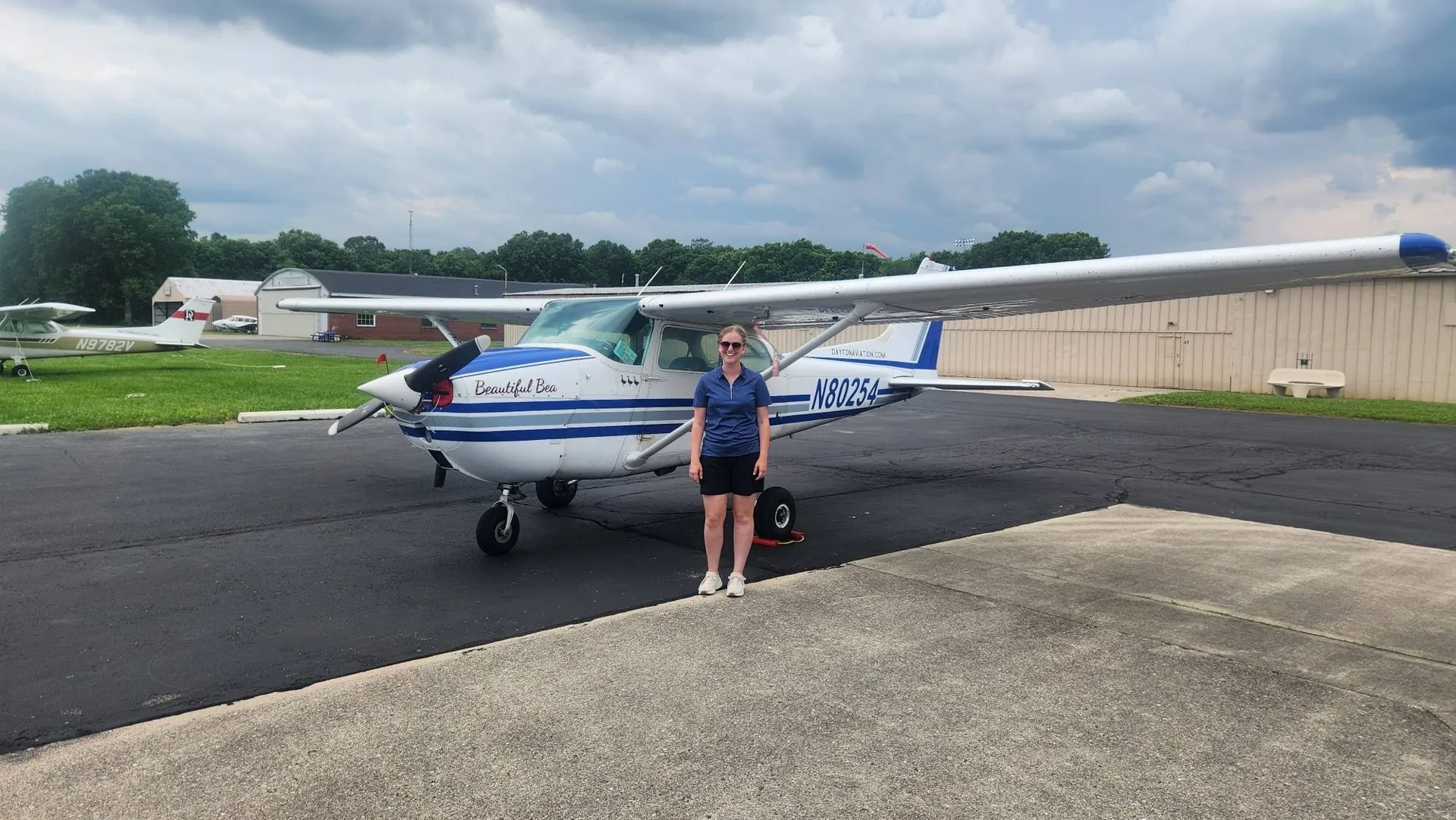
Sorting out medical qualification early keeps the solo date from slipping.
The Three Medical Classes and What Each One Is For
An FAA medical certificate comes in three classes, and the class has to match the privileges you are exercising. A higher class can serve a lower-class operation while it remains valid for that operation under 14 CFR 61.23.
| Class | Generally associated with | Where it fits in training |
|---|---|---|
| Third class | Private, recreational, and student pilot privileges | The common path for Private Pilot students before solo |
| Second class | Commercial pilot privileges and certain other duties | The step to plan before Commercial Pilot training |
| First class | Airline transport pilot duties | The one career-track pilots often obtain first to test eligibility early |
Duration follows 14 CFR 61.23 and depends on the operation. The simplified rule most students care about: third-class privileges generally last 60 calendar months if you were under age 40 on the exam date, and 24 calendar months if you were 40 or older. Read the regulation itself before you plan a timeline around it at 14 CFR 61.23, and bring the calendar math into your training plan with your instructor when you start training.
BasicMed Is an Alternative for Certificated Pilots
BasicMed gets described online as the rule that removed the medical, and that is a bad summary. BasicMed is an alternative to holding an FAA medical certificate for certain operations, not a universal replacement.
To operate under BasicMed, the FAA requires all four of these:
- A valid U.S. driver’s license
- Having held an FAA medical certificate at some point after July 14, 2006
- Completion of a medical education course
- A comprehensive medical exam with a state-licensed physician
The operating limits are equally specific. BasicMed operations are limited to aircraft authorized under federal law to carry not more than 7 occupants, with a maximum certificated takeoff weight of not more than 12,500 pounds, carrying not more than six passengers, flown within the United States at or below 18,000 feet MSL, not exceeding 250 knots, and not for compensation or hire. The FAA publishes the current requirements at FAA BasicMed.
Read that second requirement again, because it is the one that catches people. BasicMed assumes you already held a medical certificate after July 14, 2006, which is why it fits returning pilots far better than brand-new students. If you are the pilot coming back after a long gap, BasicMed belongs in the same conversation as your flight review.
The Sport Pilot Driver’s License Option Has Real Conditions
Sport pilot rules allow a different approach. Sport pilots may use a valid U.S. driver’s license instead of an FAA medical certificate where they meet the FAA conditions, and the governing rule is 14 CFR 61.303.
The conditions matter as much as the option. This path is tied to sport pilot privileges and limitations, and it comes with an eligibility question worth settling before you build a training plan around it. Our Sport Pilot program is centered on the Tecnam P92, and it is a genuinely good fit for a pilot whose mission is local recreational flying.
What we will not tell you is whether you personally qualify. That answer comes from the FAA rules and an AME who knows your history, and if you are unsure, say so when you contact us so we can help you sequence the training around the answer instead of guessing at it.
Pick the Path That Matches the Flying You Want
The decision gets simple once you stop comparing the three paths against each other and start matching each one to a mission.
| Your situation | The path to look at first | What to do next |
|---|---|---|
| New student aiming at a private certificate | Third-class medical before solo | Book an AME appointment early, then start Private Pilot training |
| New student flying locally for recreation | Sport Pilot driver’s license option, where eligible | Confirm eligibility, then talk with us about the Tecnam |
| Certificated pilot returning after years away | BasicMed, if you held a medical after July 14, 2006 | Pair it with a flight review |
| Career-track student | First or second class, obtained early | Plan it before Commercial Pilot training begins |
One more piece of planning advice from the schoolhouse. The medical is one of the few training costs that is fixed and small compared with flight time, so getting it settled early protects the money you spend later. If you are working out financing or a pacing plan for the whole certificate, raise it with us at the start of training rather than halfway through.
Common Questions About FAA Medicals and BasicMed
These come up constantly at our schoolhouse, usually in the first conversation.
Do I need a medical certificate to take a discovery flight?
No. A discovery flight with an instructor is a lesson, and you do not need a medical certificate to take lessons. You can book one through our discovery flight page and start today.
When exactly do I need the medical?
For most airplane students, before solo flight, with the exceptions and alternative pathways in 14 CFR 61.23 applying to specific certificates and operations. Bring your target certificate to us when you enroll and we will place the medical step correctly in your plan.
Can I use BasicMed as a student pilot?
BasicMed is built around pilots who have already held a medical certificate, so it fits returning pilots rather than new students. Sort your own case out with an AME before planning training around it, and tell us the answer so your training plan matches it.
What happens if my medical application gets deferred?
Deferrals are handled through the FAA medical certification process with your AME, and outcomes are individual. Your training does not have to stop entirely while that runs, since ground instruction and dual flight lessons continue, which is one reason we recommend starting the medical early in any program.
Does a driver’s license really work as a medical for sport pilot?
Where the FAA conditions are met, yes, under 14 CFR 61.303. The privileges and limitations of the sport pilot certificate come with it, so read the rule and compare the mission against our Sport Pilot program before you decide.
Should I get a first-class medical even if I only want to fly for fun?
Some career-minded students do it early to test eligibility against the strictest standard. For purely recreational flying, third class is generally the associated class, and we are happy to talk it through when you contact us.
Get the Medical Question Settled and Start Flying
The worst version of this story is the pilot who spends two years assuming they would not qualify and never asks anyone who could answer. The medical question has an actual answer, and it takes one appointment to get it.
Book an AME appointment for your eligibility questions, and then let us build the training around whatever that answer turns out to be. When you are ready to fly, enroll with Dayton Aviation Services and tell us the certificate you are aiming at so we can put the medical step in the right place in your plan.